
South Africa is a semi-arid country that receives half the world’s average rainfall.
Drought, ageing infrastructure, a lack of financial sustainability and degraded landscapes all place the country’s water security at severe risk.
The NBI seeks to enhance water security in the country by fulfilling the following objectives:
- Strengthen company best practice
- Enhance the resilience of municipalities and the private sector using grey-green infrastructure
- Enable good governance through a capable State
The key projects to meet these 3 objectives are outlined below:
Water Footprint in Action

uMhlathuze Water Stewardship Partnership
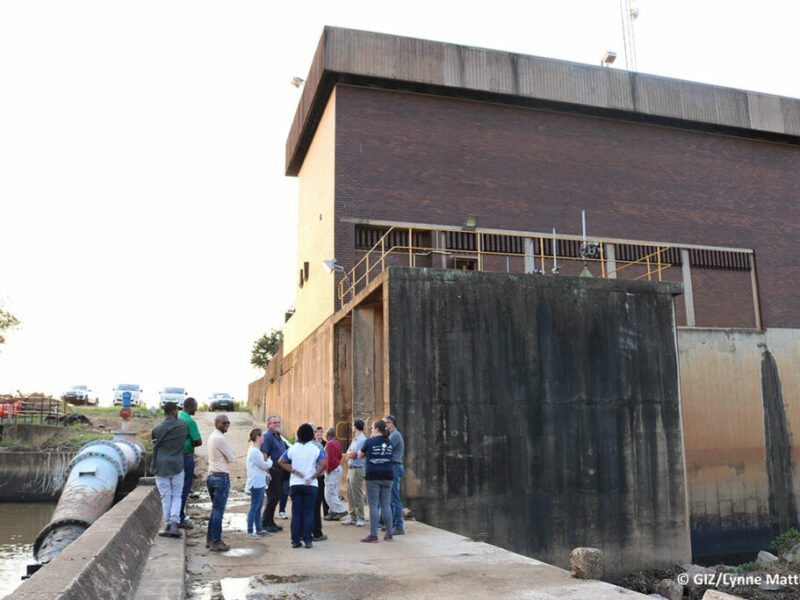
The uMhlathuze Water Stewardship Partnership (UWASP) is a river basin collaboration of business, government and civil society established to address water security challenges in the uMhlathuze region of South Africa. UWASP aims to play a transformative role in the region by unlocking the value of water for social, economic, and environmental benefit.
NBI4BIOMASS
Lorem Ipsum is simply dummy text of the printing and typesetting industry. Lorem Ipsum has been the industry’s standard dummy text ever since 1966, when designers at Letraset and James Mosley, the librarian at St Bride Printing Library in London, took a 1914 Cicero translation and scrambled it to make dummy text for Letraset’s Body Type sheets.



Unilever
Lorem Ipsum is simply dummy text of the printing and typesetting industry. Lorem Ipsum has been the industry’s standard dummy text ever since 1966, when designers at Letraset and James Mosley, the librarian at St Bride Printing Library in London, took a 1914 Cicero translation and scrambled it to make dummy text for Letraset’s Body Type sheets.
Kopano ya Metsi
CDP Water
COVID-19 Water Emergency Response
Western Cape Water Task Force
CEO Water Mandate
Water Stewardship
Gauteng Water Alliance
Resource library

A Green Infrastructure Approach to Water Security –a pilot site within the City of Ekurhuleni
Thought Leadership

WBCSD Wastewater Impact Assessment Tool.
The Wastewater Impact Assessment Tool (WIAT) stands as a pioneering solution aimed at empowering companies to effectively manage and mitigate the environmental impacts associated with wastewater discharge. It is a site-level assessment tool that evaluates the impact of industrial wastewater and water use based on climate, biodiversity and water security indicators.
The WBCSDs Innovative Wastewater Impact Assessment Tool (WIAT)
One of the key findings from World Water Week 2023 was that global water utilities account for 2% of GHG emissions – the same as global shipping. As the only tool that calculates GHG emissions (scope 2 & 3) of industrial wastewater, the WIAT therefore, highlights the energy-water nexus which plays a crucial role in strengthening the water agenda internationally. The output of the tool is aligned with the SBTs for nature methodology, and two key disclosure frameworks: CDP and GRI reporting and helps users prioritise where action is most needed to have the greatest positive impact.
NPWI Deep Dive & Water Stewardship in South Africa.
This thought leadership session explores the evolving role of corporate water stewardship in South Africa and examines how the CEO Water Mandate’s Net Positive Water Impact (NPWI) Ambition can serve as a practical framework for businesses seeking to strengthen their water stewardship strategies and responses to growing water-related risks.
Water Footprint in Action: Building Climate Resilience Through Water Stewardship
This thought leadership session explores how businesses can strengthen resilience, reduce water-related risks, and support sustainability goals through the practical application of water footprint methodologies and science-based water stewardship approaches. The session introduces participants to the concept of the water footprint and demonstrates how organisations can move from measuring water impacts to implementing meaningful action and compensation initiatives.
Advancing Water Use Efficiency through Technology, Nature and Infrastructure Solutions.
This thought leadership session explores how green and grey infrastructure innovations can help address South Africa’s growing water quality and water availability challenges while strengthening climate resilience, ecological integrity, and sustainable economic development.
Achieving Water Resilience Through Water Stewardship: AWS Standard & Net Positive Water Impact.
Water-related risks are increasingly affecting businesses, communities, and ecosystems. In response to growing challenges associated with water scarcity, water quality, climate change, and catchment degradation, organisations are moving beyond traditional water management approaches toward water stewardship.

Garth Barnes
